Getting enough protein on a vegetarian nutrition plan is easier than many people think. While meat is often considered the primary source of protein, plenty of plant-based and vegetarian-friendly foods can provide the protein your body needs for muscle growth, energy, and overall health.
If you’re looking to increase your protein intake while following a vegetarian diet, here are some simple and effective tips to help you reach your goals.:
Include High-Protein Plant-Based Foods
There are many protein-rich vegetarian foods that can help you reach your daily protein goals.
Here are some of the best choices:
- Legumes: Lentils, chickpeas, black beans, and kidney beans (8–15g protein per cup)
- Tofu and Tempeh: soy-based meat alternatives (10–20g protein per ½ – 1 cup serving)
- Seitan: made from wheat gluten, it’s one of the highest plant-based protein sources (21g protein per 3.5 oz)
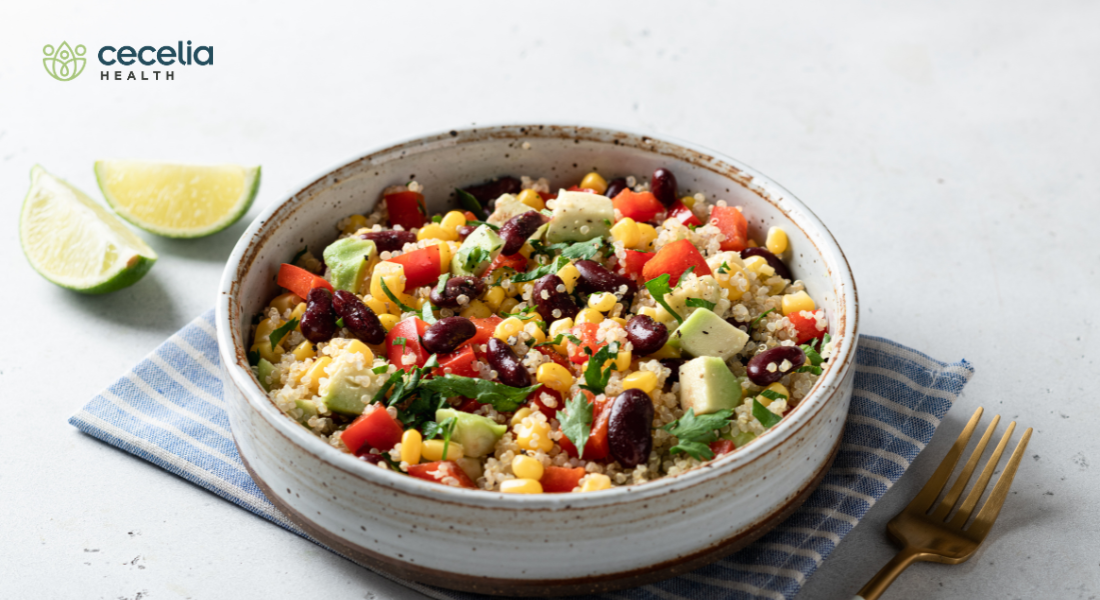
- Quinoa: a complete protein grain with all nine essential amino acids (8g protein per cup)
- Nuts and Seeds: almonds, chia seeds, flaxseeds, and pumpkin seeds (5–8g protein per ¼ cup serving)
- Dairy and Eggs (if following a lacto-ovo vegetarian plan): Greek yogurt (12-20 grams per 6 oz serving), cottage cheese (5-6 grams per ¼ cup serving), eggs (7 grams per egg), and cheese (7 grams per 1 oz serving)
Eat a variety and combination of protein sources
Plant proteins are often incomplete, meaning they don’t contain all nine essential amino acids in sufficient amounts. While incomplete proteins are not unhealthy, it is important to consume a variety of protein sources to ensure all essential amino acids are met. The body needs all of these to build and repair tissues, synthesize hormones and perform vital functions. By eating a variety of protein sources and combining incomplete proteins throughout the day, you ensure you get a complete amino acid profile.
Protein Combinations
- Rice and Beans
- Whole wheat bread and Peanut Butter
- Lentils and Quinoa
- Hummus and Whole grain pita
Start Your Day with a High Protein Breakfast
Many traditional breakfast foods are high in carbohydrates. Adding protein to your meal can help you to feel more satisfied and energized for your day ahead.
High Protein Breakfast Options
- Scrambled tofu with vegetables
- Greek yogurt with nuts and berries
- Oatmeal topped with chia seeds and nut butter
- Smoothie with plant-based protein powder and almond milk
Add Plant Based Protein Powders into your Nutrition Plan
If you struggle to get enough protein from whole foods, plant-based protein powders can be a convenient way to get a good amount of protein into your meal plan and boost your overall protein intake.
Protein Powder Options
- Pea Protein
- Brown Rice Protein
- Hemp Protein
- Soy Protein
Include Protein Rich Snacks in your Nutrition Plan
Choose protein rich foods and combine food groups to get protein in at each snack time.
Protein Rich Snack Options
- Roasted Chickpeas
- Edamame
- Trail mix with nuts and pumpkin seeds
- Apple with peanut butter
- Cut up vegetables and Hummus
- Wheat crackers and cheese
- Greek yogurt with nuts
Choose Whole Grains Over Refined Grains
Whole grains contain more protein than refined grains.
Swap Out Refined White Flour Products
- Quinoa (8g protein per cup)
- Farro (6g protein per cup)
- Buckwheat (5g protein per cup)
- Whole wheat bread (4 g protein per serving)
- Whole Wheat pasta (7 g protein per cup)
Cook with Protein-Rich Ingredients
Boost Protein Content of Your Meals
- Nutritional yeast: Adds a cheesy flavor and 5g of protein per 1 tablespoon serving
- Spirulina: A superfood alga with 4g protein per 1 tablespoon
- Hemp seeds: Sprinkle on salads or smoothies for an extra 10 grams of protein per 3 tablespoons
Plan Your Meals Ahead
Making time to meal plan helps ensure you’re getting enough protein throughout the day. Prepare meals with a mix of legumes, grains, and veggies to make balanced, high-protein meals.
Example High-Protein Vegetarian Meal Plan
- Breakfast: Oatmeal with chia seeds, almond butter, and berries
- Snack: Greek yogurt with almonds
- Lunch: Quinoa bowl with black bean salad and sliced avocado
- Snack: Roasted chickpeas and Edamame
- Dinner: Stir-fried tofu with vegetables and brown rice
Eating a high protein vegetarian nutrition plan is achievable. If you are looking for ways to get started eating more plant-based proteins, start gradually by choosing one day a week. Meatless Mondays is a great place to start. By selecting a variety of plant-based proteins throughout the day, you can meet your daily protein goals.