
When taking a glucagon-like peptide-1 receptor agonist (GLP-1), you may have heard about key dietary strategies such as consuming adequate protein and fiber to promote optimal weight loss alongside taking your medication. Macronutrients like lean protein from poultry, seafood, legumes and low-fat dairy to maintain muscle mass and plenty of fiber from healthy carbohydrates like whole grains, fruits and vegetables to help you feel full and support regularity are key. But what about the third micronutrient- fat? Let’s explore the types of dietary fats and healthy ways to incorporate beneficial fat sources into your diet while taking a GLP-1.
Why are dietary fats important for health?
Fat provides insulation to the body’s organs and is a source of energy, namely when carbohydrates are not available. It is also required to help absorb fat-soluble vitamins A, D, E, and K. While some types of fat are not healthy for the body and may increase the risk of heart disease and cancer, there are other sources that are beneficial and can help increase natural GLP-1 production, improve blood cholesterol and decrease inflammation.
The types of dietary fats include:
Saturated fats
Solid fats found in animal products such as meat and dairy products as well as palm and coconut oils. This type of fat is considered less healthy because excessive intake of saturated fat can increase high LDL (bad) cholesterol levels and cancer.
Unsaturated fats
This type of fat is found in plants, as well as fish and seafood. They include polyunsaturated fats from things such as safflower oil, fish, and walnuts, and monounsaturated fats from items like olive oil, nuts, and avocados. These types of fats can be protective against heart disease when substituted for saturated fats in the diet and may also enhance natural GLP-1 production in the body.
Trans fats/hydrogenated fats
Man-made fats that are commonly found in processed baked goods and commercial fried foods and are often referred to as hydrogenated or partially hydrogenated fats. Like saturated fats, trans-fatty acids can also raise LDL (bad) cholesterol and can also lower HDL (good) cholesterol.
Omega fatty acids
These are a specific type of polyunsaturated fat from fish/fish oils and certain seeds (flax, chia and hemp) and walnuts. Omega fatty acids help lower inflammation, protect against heart disease, and can lower both triglyceride levels and blood pressure.
Dietary cholesterol
Like saturated fat, this is present in food that comes from animals, including poultry, fish, eggs, meats, and dairy products. Research shows that dietary cholesterol does not significantly increase the risk of buildup of fat and cholesterol in arteries (atherosclerosis) in comparison to saturated and trans fats.
How much fat should be consumed daily?
The National Academy of Medicine recommends a total fat intake for all adults to be 20–35 percent of total calorie intake. This also aligns with dietary guidelines for those losing weight on GLP-1 medications. Since fats are higher in calories than protein and carbohydrates, too much fat can work against weight loss efforts. Fat is also digested much slower than the other macronutrients, so too much fat eaten at meals can increase chances of experiencing nausea and indigestion, which are already potential side effects of GLP-1 medications.
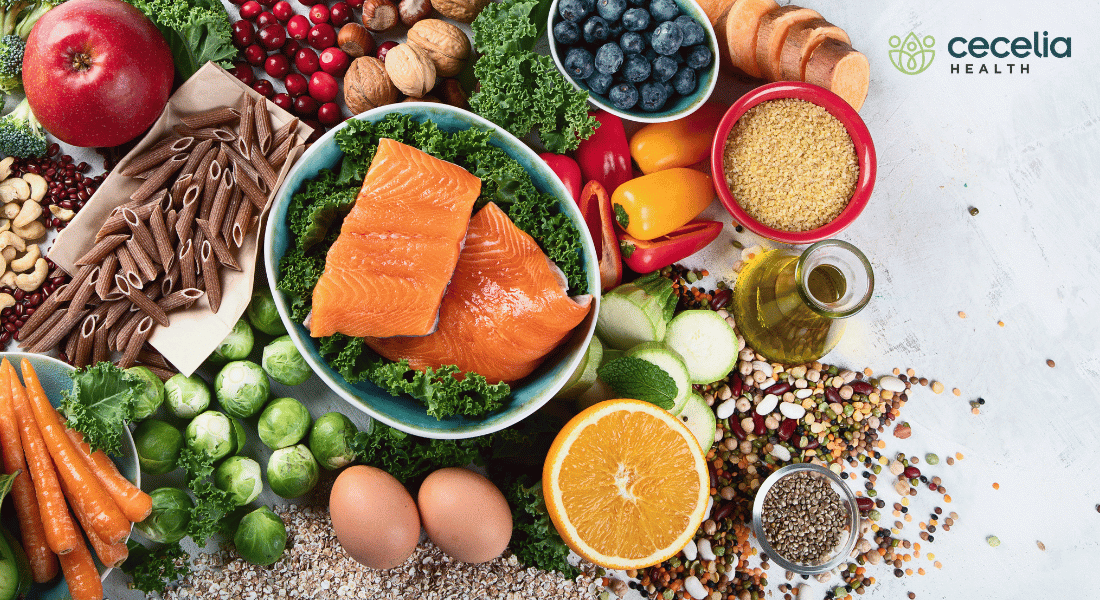
In addition to total fat intake, it is important to pay attention to the type of fat consumed. A goal is to have 10 percent or less of daily calories come from saturated fats, and trans-fat intake should be limited as much as possible. Cholesterol intake should be less than 200 milligrams per day. Emphasis should be placed on consuming a small amount of unsaturated healthy fats daily such as 1 teaspoon of plant-based margarine, 1/8 of a medium avocado, 1 tablespoon of a healthy fat based salad dressing or 1 ounce of nuts/seeds. Including 2 or more servings of fish weekly can provide the anti-inflammatory benefits of omega-3 fatty acids.
What are some strategies to include healthy fat choices daily?
Including unsaturated plant-based fats in small portions allows you to take advantage of their health benefits, as well as adding flavor to meals while helping to keep you full. Incorporate healthy fats into your diet while taking your GLP-1 medication by:
- Adding a tablespoon or two of chopped avocado in salads, on soft tacos, on omelets or spread on whole grain toast
- Sprinkling a tablespoon of chopped nuts to add crunch atop yogurt, fruit, oatmeal or salads
- Drizzling a teaspoon of olive oil on salads or cooked vegetables to add flavor
- Spreading a tablespoon of nut butter on whole wheat toast, a multigrain waffle or rice cake as part of a satisfying breakfast
- Grabbing a handful of nuts as a quick snack
With attention to portions and the right choices, adding healthy fat into your diet can be beneficial while taking a GLP-1.