
Maintaining good hygiene is especially important for people with diabetes due to their increased risk of infections and slower healing processes. Here are key hygiene practices and considerations for individuals with diabetes:
Skin Care
Daily Inspection
Check your skin daily for cuts, blisters, or sores, especially on your feet, as these can become infected easily.
Keep Skin Clean and Dry
Bathe daily and ensure skin folds (e.g., underarms, groin area) are kept dry to prevent fungal infections.
Moisturize
Use a gentle moisturizer to prevent dry and cracked skin but avoid applying it between toes as moisture here can promote fungal growth.
Prompt Wound Care
Clean and cover any cuts or abrasions immediately with antiseptic and a sterile bandage.
Foot Care
Daily Foot Checks
Inspect your feet daily for sores, redness, swelling, or blisters. Use a mirror to view difficult to see areas or ask someone to help if needed.
Proper Footwear
Wear comfortable, well-fitting shoes and clean, dry socks. Avoid going barefoot to prevent injuries.
Toenail Care
Trim toenails straight across and file edges to prevent ingrown nails. If you have difficulty, see a podiatrist.
Regular Podiatrist Visits
Have a healthcare professional examine your feet regularly.
Oral Hygiene
Brush and Floss
Brush your teeth at least twice a day and floss daily to prevent gum disease, which is more common in people with diabetes.
Regular Dental Checkups
Visit your dentist regularly and inform them about your diabetes. Ask your insurance provider about dental cleaning coverage for persons with diabetes. Oftentimes, additional cleanings and treatments are covered for persons with diabetes.
Watch for Symptoms
Be alert for signs of gum disease such as redness, swelling, or bleeding gums.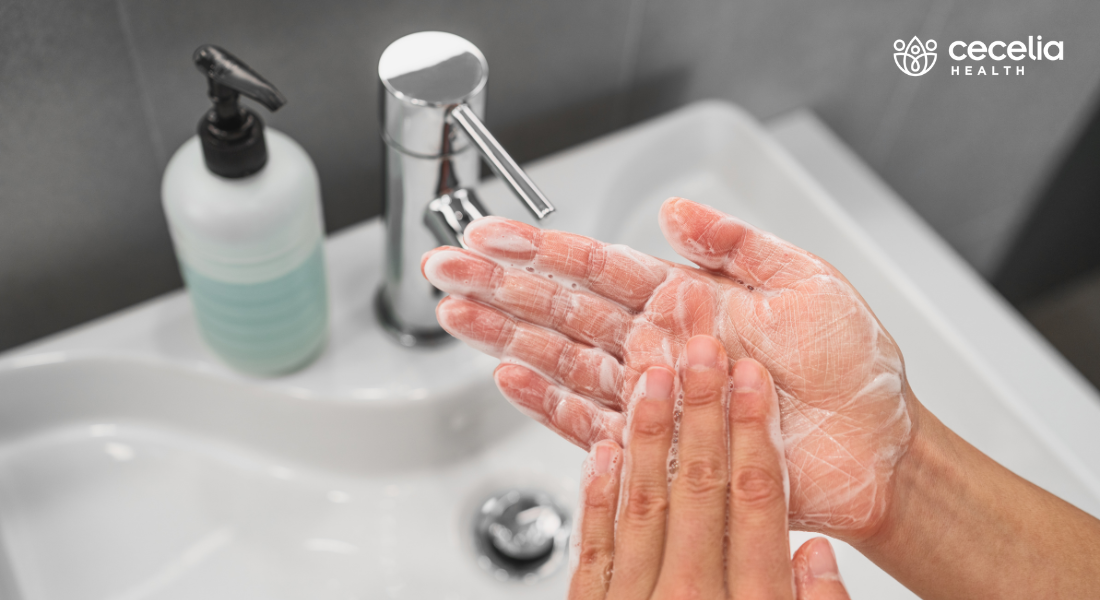
Hand Hygiene
Frequent Washing
Wash hands thoroughly with soap and water, especially before meals, after using the restroom, and after touching potentially contaminated surfaces.
Hand Moisturizer
Use a moisturizer to prevent dry skin and cracks, which can be entry points for infections.
Blood Glucose Monitoring Hygiene
Clean Hands
Wash your hands before checking your blood sugar levels.
Sanitize Equipment
Regularly clean your glucose meter and either wash hands well or use alcohol swabs on your finger before pricking.
Dispose of Used Supplies
Properly dispose of used supplies in trash or sharps bin for needles.
General Tips
Vaccinations
Stay up to date with vaccinations, such as flu and pneumonia shots, to prevent infections.
Healthy Diet and Hydration
Maintain a balanced diet and stay hydrated to support overall health.
Manage Blood Sugar
Keep blood sugar levels within the target range to reduce the risk of infections and other complications.
Avoiding Infections
Promptly Treat Infections
Seek medical advice at the first sign of an infection, such as fever, redness, or pus.
Stay Active
Regular physical activity can improve circulation and overall health, helping to prevent infections.
By adhering to these hygiene practices, individuals with diabetes can better manage their condition and reduce the risk of complications.