
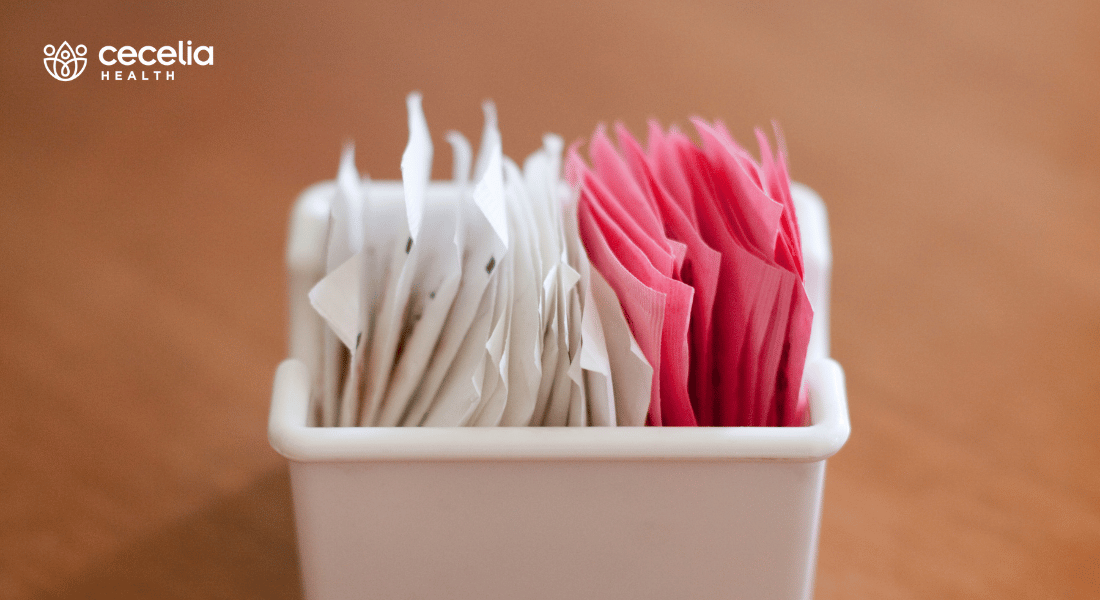
There have been many claims regarding the supposed health benefits and risk of using artificial sweeteners in recent years. Artificial sweeteners are sugar substitutes that provide sweetness with little or no calories. This includes sugar alcohols and other sweeteners with a significantly lower amount of calories compared to table sugar. Common types of artificial sweeteners include Aspartame, Sucralose, Erythritol, Sorbitol and Xylitol.
These sweeteners are found in many “diet” foods such as sugar free candies and sodas and are often consider “healthy” for this reason. On the other hand, reports of health problems supposedly caused by consuming sweeteners have surfaced, making some people uneasy about using them. Let’s take a look at what the research shows about the “pros” and “cons” of artificial sweeteners.
Pros
As previously mentioned, artificial sweeteners have less calories than normal sugar or even honey, maple syrup and coconut sugar. They also have little to no effect on increasing the body’s blood sugar levels. Therefore, for individuals needing to control their blood sugar or reduce their caloric intake, these sweeteners provide options for sweet treats without the negative impact of increased calories and blood sugar elevation.
Cons
Not everyone tolerates artificial sweeteners well. These sweeteners can often lead to complaints of bloating, gas and diarrhea. The amount of sweetener needed to cause symptoms varies depending on the type of sweetener and the individual. Therefore, it is best to limit consumption if you notice such symptoms.
In recent years, research has found an increased risk of heart attack and stroke linked to certain artificial sweeteners, including erythritol and xylitol. Per the studies, the platelets (a blood component involved in forming blood clots) in the body became more sensitive to clotting when there were high levels of the sweeteners found in the blood.
It is important to note that the FDA has approved the artificial sweeteners you would normally find in your grocery store or your local coffee shop as safe for consumption. However, it is best to limit use and not be consuming large quantities or on a daily basis. If you are looking for alternative sweeteners to help cut back on sugar consumption, coconut sugar, honey and maple syrup are all lower on the glycemic index. However, these are caloric sweeteners. They do add to calorie consumption and still increase blood sugar levels, just not to the degree that table sugar does.
For more information, check out our related blog articles “Artificial Sweeteners – Myths and Facts Explained” and “Sugar Reduction as Part of a Lower Carb Lifestyle.”