
Vegetables are excellent sources of nutrients such as vitamins and minerals that allow our bodies to maintain daily functions and can help keep us healthy by supporting our immune systems. According to the 2021 National Survey of Children’s Health: in 20 states, more than half of the children ages 1 to 5 had not eaten a vegetable daily in the preceding week.
The “Fruit and Veggie Toolkit for Kids” by the American Heart Association recommends children consume at least one serving of fruit or vegetables in each meal. (Access the free toolkit here.) However, it is rare that a child chooses to eat vegetables on their own. So, you may be wondering what you can do to encourage this healthy habit in your children. Let’s look at a few helpful tips you can use to get your kids to eat their veggies.
Modeling
Almost as soon as we are born, we begin learning behaviors by observing those around us. This is also true in the case of our eating habits. It is important for children to see others, especially adults, practicing healthy eating, including vegetables. You may have heard the child-rearing advice “more is caught than is taught.” If a child is asked to eat something but they see that “mommy or daddy” aren’t following the same advice, it is only natural that the child will feel this is unfair. Therefore, the first tip is for the adults to actually eat YOUR veggies!
Clear out the junk
Another practical way of encouraging kids to eat healthier is by purging your house of junk food! Children will be less inclined to snack on fresh fruits and veggies when they know their favorite chips or Oreo cookies are in the cabinet. Cleaning out the junk can also help avoid food waste. People often find that their fresh produce goes bad before they use it; by getting rid of the junk food in the house you will be more likely to use your fruits and vegetables when you or the kids get the “munchies”.
Get creative
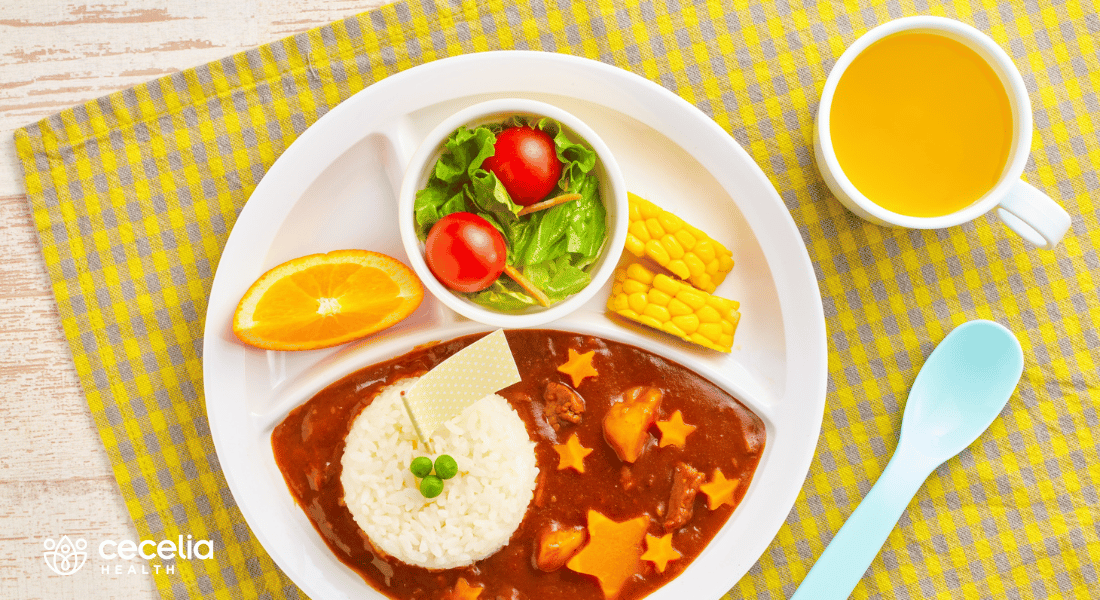
Sometimes some creativity may be required. An easy way to get vegetables into a child’s diet is to include the vegetables in dishes the child enjoys. For example, spinach, carrots and avocados can easily be added to a fruit smoothie or try this kid-friendly Turkey Meatloaf with celery and bell peppers for added veggie power! Also, you can try shredding or finely chopping additional vegetables into spaghetti sauce. The child will likely never know they are getting an additional serving of veggies in their meal!
Try dipping sauces
Many children love to use dipping sauces, mostly because it’s just fun! You can offer the child ketchup, ranch dressing, hummus from the store. Or, try making your own dips with Greek yogurt, guacamole or this Peanut Butter Hummus recipe! Nutrition.gov has a kid-friendly list of recipes with several dipping sauce options to help you get started.
Try a family garden
Exposing children to vegetables through the growing process can help to spark curiosity and interest. Plus, you may find that your freshly grown tomatoes or carrots just taste that much better by growing them yourself! If you don’t have much time or space for a vegetable garden, many vegetables like tomatoes, lettuce, spinach, cucumbers, and radishes can easily be grown in pots!
Avoid “good” and “bad” terms
Try to avoid categorizing foods as “good” or “bad” for the child. The average child is rarely motivated to do things because it is “good for them.” This tip can be easy to forget when you are trying to explain to the child the importance of eating vegetables. However, it is best to avoid using these terms. Rather, focus on encouraging children to try a wide variety of foods and eat a balanced diet. If you are looking to provide the child with a motivator to try certain veggies, consider highlighting a specific health benefit that the nutrients will provide, such as strong bones, powerful muscles, good eyesight, etc.
It’s ok to take breaks and reintroduce foods later
It is important to remember that every child goes through phases and, just because they say they don’t like a food today, doesn’t mean that they won’t change their mind down the road. Toddlers are especially famous for eating a plateful of a certain food item one day, only to refuse to touch it the next day… often to the bewilderment of their parents! If the child refuses to eat a certain vegetable it is best to just avoid serving that veggie for a time and a month or two later, try reintroducing it.
Kids, just like adults, need time to implement new habits. If you are wanting to increase the veggies in your child’s diet, remember to be patient with your child and yourself and make it fun by trying one or two of the tips above! You can also find more great information here on how to increase fruits and vegetables in your diet!