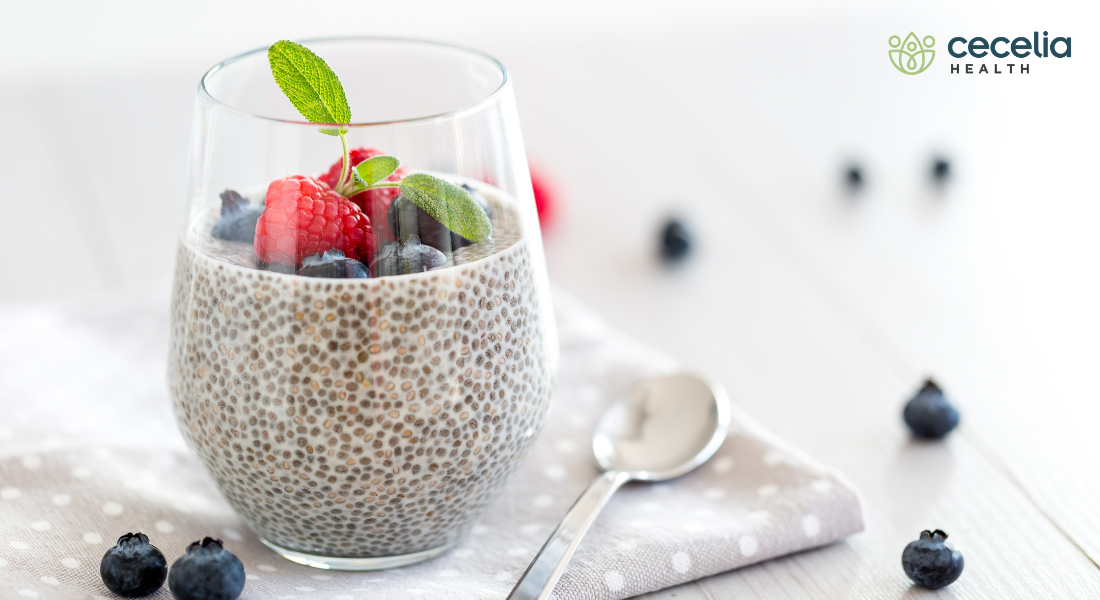
Chia seeds are often referred to as a super food. They are packed with nutrients that can help to keep your heart healthy. These tiny white and black seeds are derived from the Salvia hispanica plant native to Central America. To add a little history, they have been consumed for over 5,000 years as they were a staple food for the Aztecs and Mayans. They are gluten-free, high in fiber, plant-based, and can be added to a variety of foods such as smoothies, yogurt, salads, oatmeal and baked goods. You can also enjoy chia pudding as a healthy meal or snack. Let’s take a look at what makes them a nutrition powerhouse for heart health.
Chia seeds heart healthy benefits
Rich in Omega-3 fats
Chia seeds are one of the richest plant-based sources of alpha-linolenic acid (ALA). ALA is a type of omega-3 fatty acid which can help reduce inflammation, a major contributor to heart disease. Omega-3 fats have also been shown to have the potential to lower blood pressure. ALA omega-3 is particularly important for those who follow a vegan or vegetarian diet and chia seeds consumed regularly are a great way to include this nutrient in your diet. Other forms of omega-3 (EPA and DHA) are found in fish.
Aid in helping to lower cholesterol
Chia seeds are high in soluble fiber which is the type of fiber that dissolves in water and forms a gel-like substance in the digestive tract. Chia seeds are the perfect example of this because if you soak them in water or any liquid, you will see this gel form before your eyes. This gel-like substance attaches to cholesterol in the digestive track, helping the body remove it. This process can help with lowering cholesterol, particularly the bad (LDL) cholesterol.
Help in lowering blood pressure (BP)
High blood pressure is one of the leading causes of heart disease and strokes. Studies have shown that including chia seeds in your diet can help with lowering BP, particularly the systolic BP. The systolic is the top number in your BP reading. Systolic indicates the pressure in the arteries when the heart beats and pumps blood throughout the body. The nutrients- omega-3 fat, magnesium, and potassium in chia seeds are all factors that can help maintain healthy BP numbers.
High in fiber
Chia seeds are considered a high fiber food (10 grams of fiber per 2 tablespoons) which is important for heart health. As mentioned above, fiber plays a role in helping to lower cholesterol. Along with its cholesterol lowering properties, fiber also helps with maintaining blood sugar levels and can help with weight loss as it keeps you feeling satisfied when consumed, leaving you less likely to overeat. Keeping blood sugar levels stable and maintaining a healthy weight are both factors in heart disease prevention.
Help with inflammation
Obesity and chronic inflammation are both tied to heart disease. Chia seeds have anti-inflammatory nutrients (omega-3 fats and antioxidants). Chronic inflammation is linked to atherosclerosis and other cardiovascular problems.
Adding chia seeds to your meal plan
Start slowly when adding chia seeds to your diet, as with any high fiber foods you want to gradually increase fiber for better tolerance.
- Make chia pudding: Mix 3 tablespoons of chia seeds with 1 cup of unsweetened almond milk, put it in the refrigerator overnight and when you take it out in the morning it will have formed a pudding that you can top with chopped fruit and nuts before eating.
- Add to smoothies: A tablespoon of chia seeds adds fiber and protein without altering taste.
- Use as an egg substitute: Mix 1 tablespoon of chia seeds with 2 ½ tablespoons of water to replace one egg in vegan baking.
- Sprinkle on salads, oatmeal, or yogurt for an added crunch and nutrient boost.
- Add to recipes when making baked goods like muffins or energy bars.
As part of a heart healthy diet, these little seeds can help keep your heart happy.